The Classic Greek Salad: A Taste of the Mediterranean Sun
Introduction
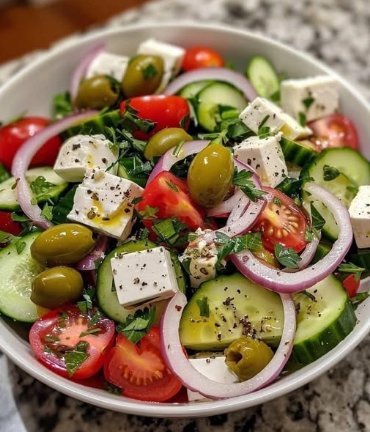
The Greek salad, known as “Horiatiki” (meaning “village salad”) in Greece, is more than just a dish—it’s a vibrant expression of Mediterranean life. With its crisp vegetables, creamy feta, and briny olives, this salad captures the essence of Greek cuisine: fresh, simple ingredients combined to create something greater than the sum of its parts. Perfect as a light lunch, a substantial side, or a shared mezze plate, this timeless recipe brings the sun-drenched flavors of the Greek islands to your table in minutes.
A Brief History
The origins of Greek salad date back to rural 19th-century Greece, where farmers would prepare “Horiatiki” using whatever summer vegetables were abundant. Unlike Western versions, traditional Greek salad never includes lettuce. The classic combination of tomatoes, cucumber, onion, peppers, olives, and feta cheese represents the Mediterranean triad of flavors: fresh produce, olive oil, and dairy. This salad was traditionally served as a main dish for farmers during hot summer days, accompanied by crusty bread to soak up the flavorful juices.
Health Benefits
This nutrient-dense salad offers numerous health advantages:
· Heart Health: Olive oil provides monounsaturated fats, while vegetables offer potassium · Antioxidant Rich: Tomatoes contain lycopene, peppers provide vitamin C · Digestive Support: Cucumbers are hydrating and contain fiber · Bone Health: Feta cheese offers calcium and protein · Anti-inflammatory: Onions contain quercetin, olives provide healthy fats
Complete Ingredients List
Main Components:
· 2 cups cherry tomatoes, halved (or 3 medium vine-ripened tomatoes, wedged) · 1 English cucumber, sliced into half-moons · 1/2 red onion, thinly sliced · 1 green bell pepper, seeded and sliced · 1 cup Kalamata olives · 200g block of feta cheese (traditional Greek feta preferred)
For the Dressing:
· 1/3 cup extra virgin olive oil · 2 tablespoons red wine vinegar · 1 teaspoon dried oregano (Greek oregano if available) · 1 small garlic clove, minced · Sea salt and freshly ground black pepper to taste
· Use heirloom tomatoes in summer · Seek out authentic Greek feta (made from sheep’s milk) · Add a sprinkle of dried rigani (wild Greek oregano)
For the Adventurous:
· Add grilled octopus or shrimp · Include artichoke hearts · Substitute watermelon for tomatoes in a summer twist
For Vegetarians/Vegans:
· Replace feta with firm tofu marinated in lemon and herbs · Add chickpeas for extra protein · Use vegan feta alternatives
For the Time-Pressed:
· Pre-chop vegetables (except tomatoes) and store separately · Use a pre-made Greek vinaigrette · Substitute pepperoncini from a jar
Pro Tips from Greek Grandmothers
Tomato Wisdom: Salt tomatoes separately and let sit 5 minutes before assembling—this enhances flavor and creates delicious juices
Olive Oil Matters: Use the best extra virgin olive oil you can find—it makes all the difference
Feta Etiquette: Never refrigerate feta in its brine before serving; bring to room temperature for creamier texture
Timing: Assemble just before serving to maintain vegetable crispness
Bread Companion: Stale bread is perfect for soaking up juices—don’t waste it!
Conclusion
The Greek salad embodies the Mediterranean philosophy of “less is more.” With just a handful of quality ingredients, it delivers an explosion of flavor, texture, and nutrition that has sustained generations. This isn’t merely a recipe—it’s an edible postcard from the Aegean, a celebration of summer, and a testament to how simple ingredients can create extraordinary meals.
Whether you’re enjoying it as a light lunch on a sunny balcony, serving it as part of a festive spread, or packing it for a picnic, this salad connects you to centuries of Greek culinary tradition. Its bright colors mirror the blue and white of Greek island architecture, its freshness recalls sea breezes, and its robust flavors speak of sun-warmed earth.
For salad lovers around the world, the Greek salad remains a perfect example of how eating well doesn’t require complexity—just quality ingredients prepared with respect for tradition. So gather your vegetables, block of feta, and olives; pour the olive oil generously; and savor this timeless taste of the Mediterranean. Καλή όρεξη! (Kalí órexi!—Bon appétit!)